
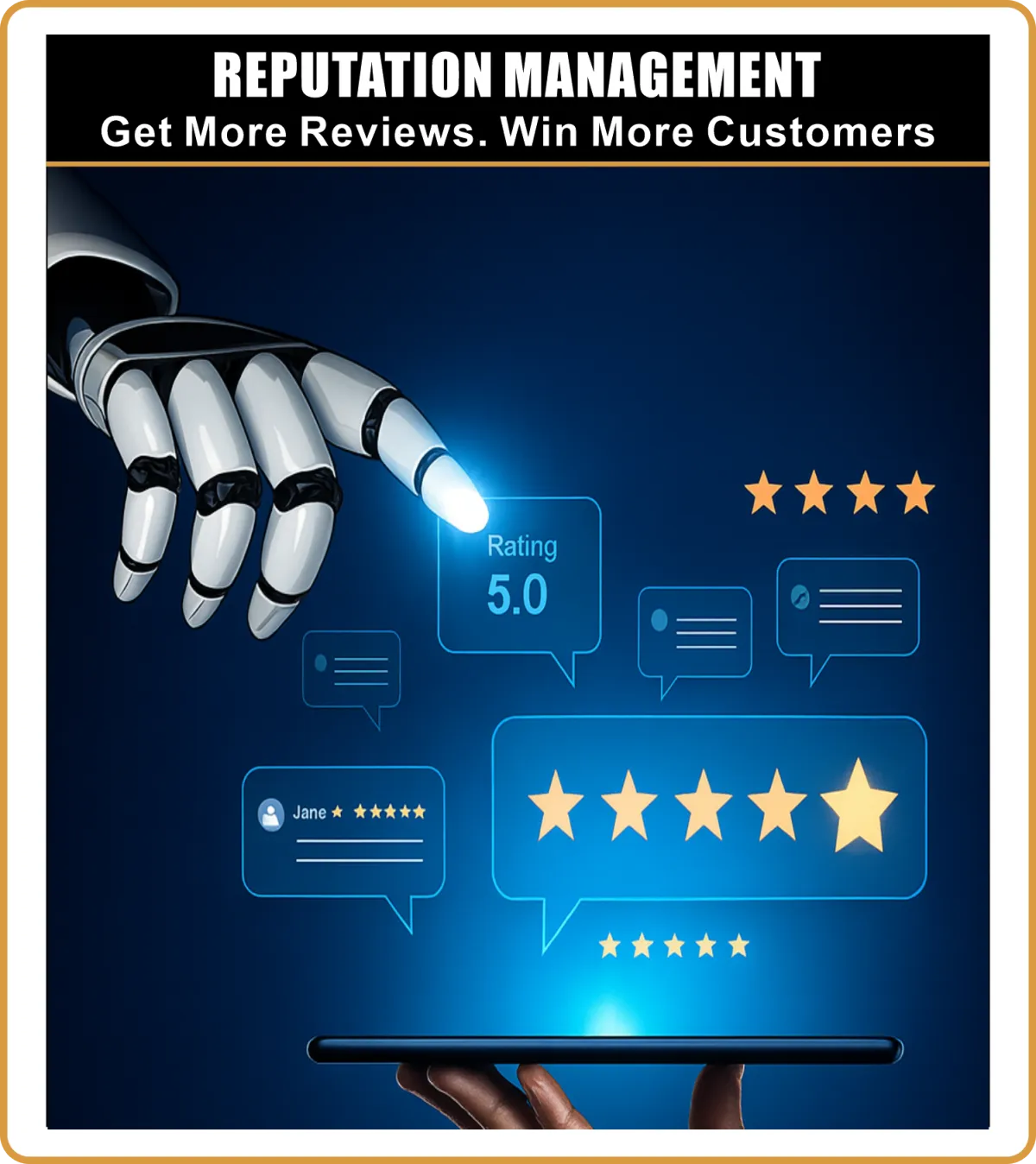
Strong Reputation. Strong Profits
Your reputation is your most valuable asset — and in today’s digital world, it can make or break your business.
At 10XAI, our Reputation Management system monitors your online presence across Google, Facebook, Yelp, and dozens of other platforms to ensure your brand always shines in the best light. We automatically track reviews, respond to feedback, and help you build stronger relationships with your customers.
With AI-powered alerts and response automation, you’ll never miss an opportunity to turn a happy customer into a powerful advocate — or quickly resolve an issue before it impacts your credibility.
When your online image shines, your business grows — here’s how:
Build Trust Instantly — 90% of customers read reviews before making a purchase. Positive feedback builds credibility and gives customers the confidence to choose you.
Boost Local SEO Rankings — More positive reviews and consistent engagement help your business rise to the top of Google Maps and local search results.
Increase Sales & Conversions — Businesses with higher ratings attract more clicks, more calls, and more paying customers.
Strengthen Customer Relationships — Responding quickly to reviews shows you care, turning one-time buyers into loyal advocates.
AI-Powered Monitoring — Instantly detect new reviews, social mentions, and feedback so you can act before issues spread.
Automated Review Requests — Get more 5-star reviews from satisfied customers through automated text and email campaigns.
With 10XAI, you don’t just manage your reputation — you grow it, protect it, and turn it into a competitive advantage.

Reputation Management, Turns Every Review Into Revenue
Your reputation is more than just stars and comments
it’s the engine that drives trust, traffic, and sales.
With 10XAI Reputation Management, you gain full control of how your business is seen online and how customers experience your brand.
10XAI goes beyond just monitoring reviews,
we give small businesses the tools to take control of their online image.
FREQUENTLY ASKED QUESTIONS
1. What is online reputation management for businesses?
Online reputation management is the process of monitoring, improving, and protecting how your business appears across reviews, search results, and online platforms. It includes generating positive reviews, responding to feedback, managing ratings, and ensuring potential customers see accurate, trustworthy information when researching your business online.
2. Why is reputation management important for local businesses?
Reputation directly impacts trust and buying decisions. Most customers check reviews before calling or booking, especially for local services. Strong reputation management increases conversions, improves local search visibility, and prevents negative or outdated reviews from driving potential customers to competitors.
3. How does reputation management help with SEO and local rankings?
Search engines use reviews, ratings, and engagement signals as ranking factors. Consistent positive reviews improve local SEO, increase map visibility, and strengthen trust. Reputation management ensures reviews are generated, responded to, and distributed across platforms in a way that supports both SEO and local search performance.
4. Can reputation management help me get more Google reviews?
Yes. Reputation management systems automate review requests through text and email, making it easy for satisfied customers to leave feedback. This increases review volume and consistency while reducing friction, helping businesses earn more Google reviews without manually chasing customers.
5. How do businesses respond to negative reviews?
Reputation management helps businesses respond quickly, professionally, and consistently to negative reviews. Timely responses show accountability, reduce damage to trust, and often lead to updated ratings. Proper handling of negative feedback can actually improve credibility and customer confidence over time.
6. Is reputation management automated or manual?
Modern reputation management combines automation and human oversight. Automated systems request reviews, monitor platforms, and alert teams, while businesses maintain control over responses and escalation. This balance ensures efficiency without sacrificing authenticity or compliance with review platform guidelines.
7. What review platforms are included in reputation management?
Reputation management typically covers platforms like Google, Facebook, Yelp, and industry-specific review sites. Centralized dashboards allow businesses to monitor, respond, and manage reviews across multiple platforms from one place, ensuring consistency and visibility wherever customers search.
8. How quickly can reputation management improve my online ratings?
Initial improvements often appear within 30–60 days as new positive reviews are generated. Long-term results depend on review volume, customer experience, and consistency. Reputation management creates a steady review flow that gradually outweighs older or negative feedback over time.
9. Does reputation management increase customer trust and conversions?
Yes. Businesses with strong ratings and recent positive reviews convert at significantly higher rates. Reputation management builds social proof, reduces hesitation, and reassures customers before they call, book, or purchase, directly impacting revenue and lead quality.

Innovation
Fresh, creative solutions.

Integrity
Honesty and transparency.

Excellence
Top-notch services.
Copyright 2026. 10X AI SOLUTIONS. All Rights Reserved.