
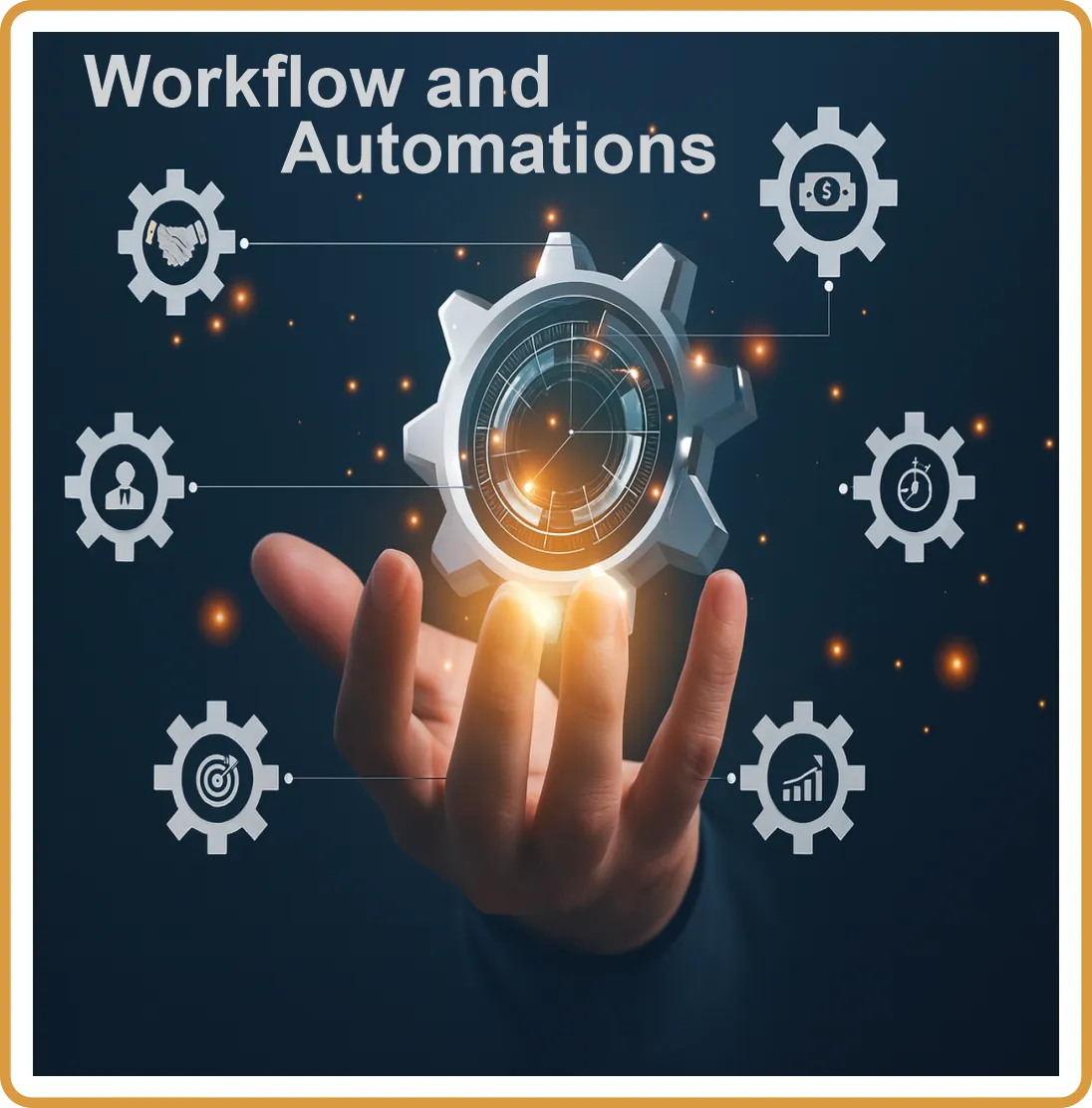
Save Time, Eliminate Busywork, and Let Your Business Run Itself
Running a business takes time — but not every task should take your time. With 10XAI Workflows & Automations, your daily operations connect and run seamlessly in the background, giving you more time to focus on customers and growth.
Every part of your process — from the moment a lead comes in to the final review request — is handled automatically. The system instantly responds to inquiries, books appointments, sends confirmations, and follows up with personalized messages, all without you lifting a finger.
Imagine never having to worry about missed calls, forgotten follow-ups, or lost opportunities. 10XAI keeps everything flowing — automatically sending reminders, nurturing leads, updating your CRM, and notifying your team when action is needed.
Workflows — The Engine That Powers Your Business Efficiency
In every successful business, time, consistency, and customer experience are everything — and that’s exactly what automated workflows deliver.
A workflow is a system of connected actions that runs automatically behind the scenes — from capturing leads and sending instant responses to scheduling appointments, processing orders, sending reminders, and nurturing customers long after the sale.
Instead of manually juggling dozens of repetitive tasks, workflows let your business run on autopilot — saving time, reducing errors, and ensuring no opportunity slips through the cracks.
How does workflow automation work?
Workflow automation typically relies on a series of if/then statements to trigger another task. It then branches off depending on the action that was taken by a lead, employee, or another stakeholder.
Let’s walk through an example workflow for turning a form submission into a deal opportunity.
1) A website visitor submits a form.
2) The action automatically enrolls the visitor in a drip campaign. It creates a new deal and sets the status to "New."
3) The first email of the drip campaign is sent to the lead, requesting to schedule a meeting.
4) The lead clicks through to the meeting scheduler and creates an appointment.
5) A thank you email is sent to the lead, confirming the date and time.
6) The CRM creates a new task and assigns it to a sales rep.
The sales rep then reaches out personally, ending the automated workflow.
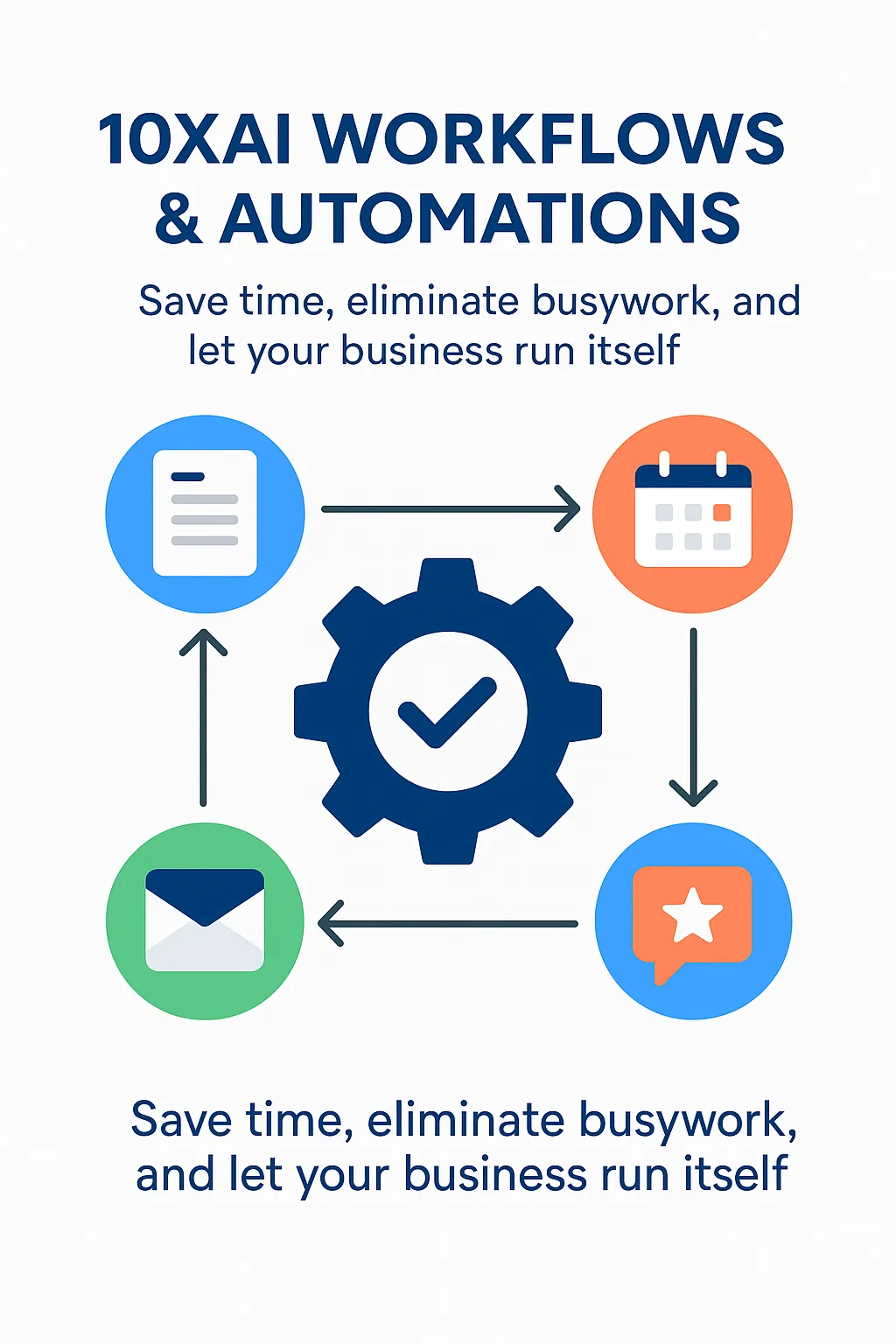
Automations — The Smart Systems That Run Your Business for You
Automations are the secret weapon behind modern, fast-growing businesses. They take repetitive, time-consuming tasks and turn them into hands-free, intelligent processes that happen automatically — exactly when they should, exactly how you want, and without human error.
From sending follow-up messages and assigning leads to pipelines, to triggering emails, updating records, sending invoices, tagging customers, or even activating AI Agents — automations keep your business running with precision, consistency, and speed.
With 10XAI Automations, your business becomes more organized, more efficient, and far more profitable.
FREQUENTLY ASKED QUESTIONS
1. What are workflow automations for businesses?
Workflow automations are systems that automatically complete tasks and processes without manual effort. They connect tools like CRMs, email, SMS, calendars, and AI agents to move leads, customers, and data through predefined steps, reducing errors, saving time, and improving operational efficiency.
2. How do workflow automations save time and money?
Workflow automations eliminate repetitive manual tasks such as follow-ups, data entry, notifications, and scheduling. By running processes automatically in the background, businesses reduce labor costs, speed up response times, and ensure nothing falls through the cracks, leading to higher productivity and better ROI.
3. What business processes can be automated?
Common automations include lead follow-up, appointment booking, missed-call responses, email and SMS campaigns, internal notifications, review requests, onboarding sequences, and CRM updates. Any repeatable process with clear steps can usually be automated to improve consistency and speed.
4. Do workflow automations work with AI agents and chatbots?
Yes. Workflow automations integrate seamlessly with AI agents and chatbots. When an AI agent captures a lead or answers a question, workflows can trigger follow-ups, schedule appointments, update CRM records, or notify staff automatically, creating a fully connected and hands-free system.
5. Can workflow automations integrate with my existing software?
Yes. Workflow automations are designed to connect with CRMs, calendars, email platforms, SMS systems, payment tools, and other business software. Integrations ensure data flows automatically between systems, reducing manual work and keeping information accurate and up to date.
6. Are workflow automations customizable for my business?
Absolutely. Workflow automations are fully customizable based on your business processes, industry, and goals. Automations can be simple or complex, with conditional logic, timing rules, and personalization to match how your business operates and how customers interact with you.
7. How long does it take to set up workflow automations?
Basic workflow automations can often be set up within one to two days. More advanced automations with multiple integrations, AI agents, and decision logic may take several days. Setup time depends on complexity, but most businesses see quick deployment and immediate efficiency gains.
8. Do workflow automations improve customer experience?
Yes. Workflow automations improve customer experience by delivering faster responses, consistent communication, and timely follow-ups. Customers receive the right message at the right time, reducing delays and confusion while creating a smoother, more professional interaction with your business.

Innovation
Fresh, creative solutions.

Integrity
Honesty and transparency.

Excellence
Top-notch services.
Copyright 2026. 10X AI SOLUTIONS. All Rights Reserved.