
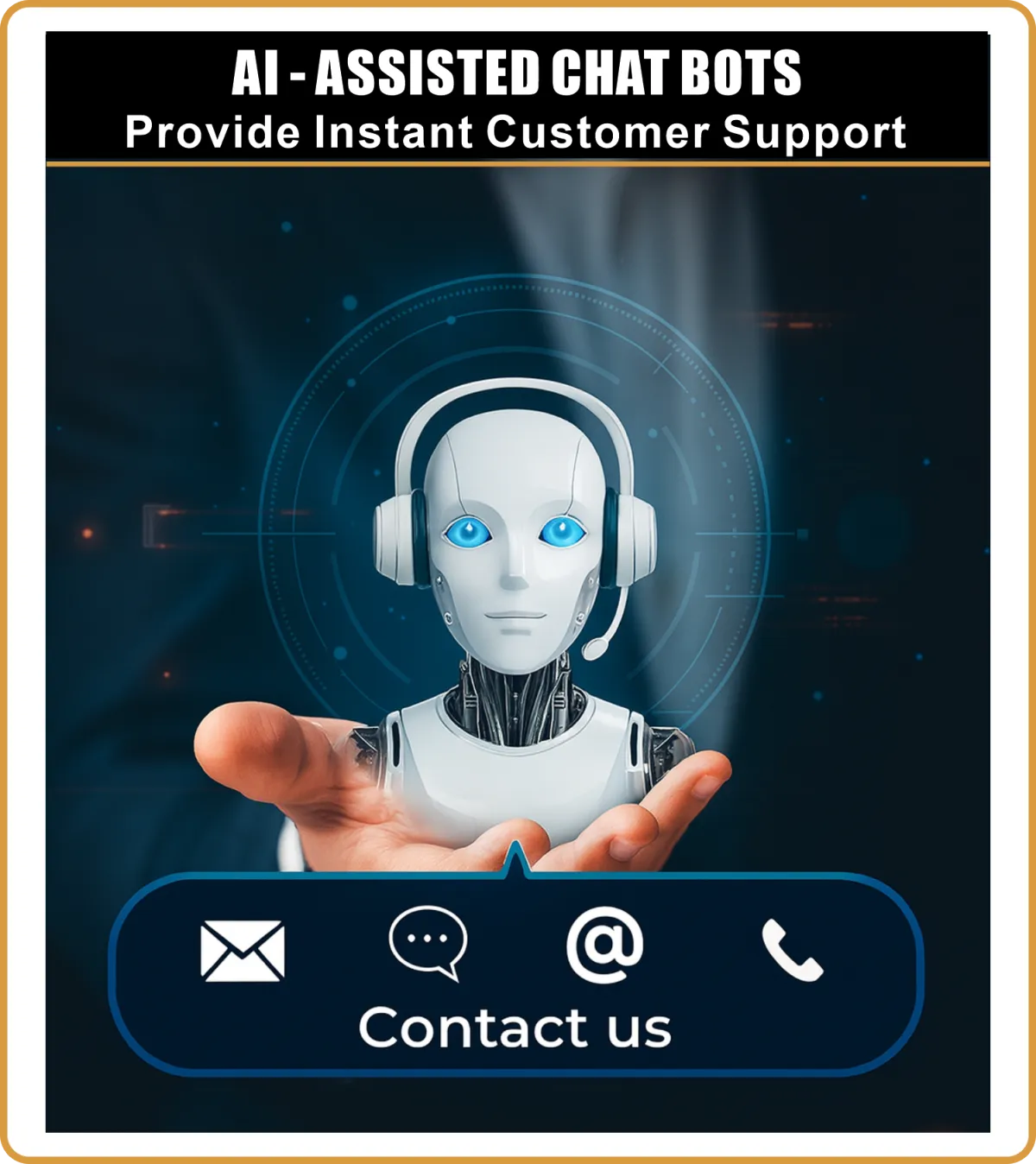
AI ASSISTED CHATBOTS
Turn Conversations Into Customers.
They work like a 24/7 sales and support team, instantly engaging visitors, answering questions, booking appointments, and capturing leads.
By guiding customers through every step of their journey, chatbots ensure no opportunity is ever missed , turning casual inquiries into paying clients and boosting overall profits.
How AI Chatbots Grow a Company’s Profits
CUSTOMER SERVICE AND SUPPORT
-- Answer FAQs – Instantly provide answers to common questions.
-- 24/7 Support – Be available around the clock without extra staff.
-- Order Tracking – Let customers check shipping and delivery status.
-- Problem-Solving – Help troubleshoot issues or direct to resources.
BOOKING AND SCHEDULING
-- Appointment Booking – Customers can schedule services instantly.
-- Rescheduling & Cancellations – Adjust bookings without needing staff.
-- Reminders – Send automated notifications to reduce no-shows.
-
SALES AND LEAD GENERATION
-- Capture Leads – Collect names, emails, and phone numbers.
-- Qualify Prospects – Ask screening questions to sort hot leads from casual visitors.
-- Product Recommendations – Suggest items or services based on customer needs.
--Upselling & Cross-Selling – Offer add-ons or upgrades automatically.
-
Marketing & Engagement
-- Collect Feedback & Reviews – Gather ratings, testimonials, or surveys.
-- Run Promotions – Share discounts, coupons, or limited-time offers.
-- Interactive Campaigns – Quizzes, polls, or contests to boost engagement.
-- Personalized Messaging – Tailor responses based on customer behavior.
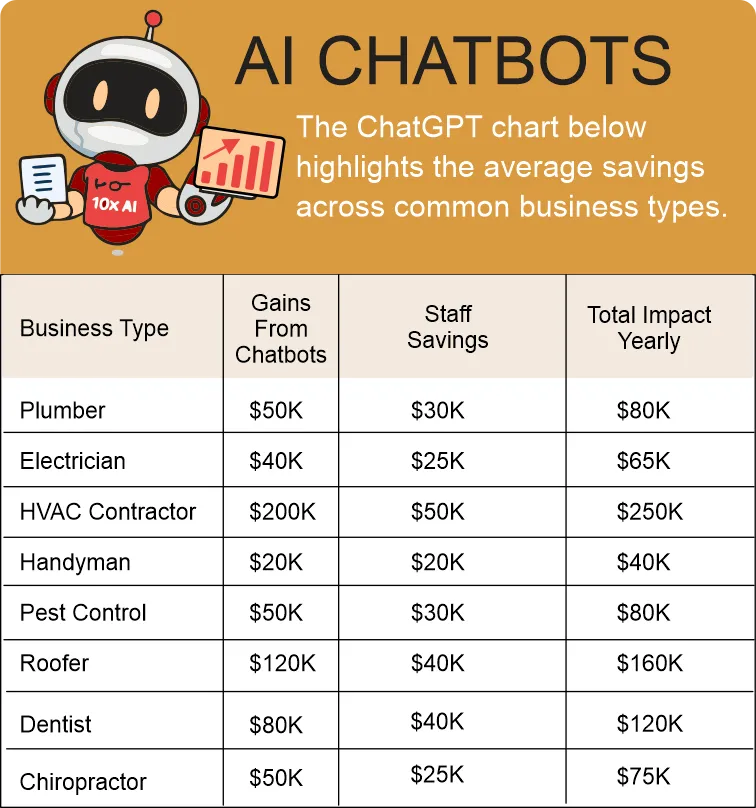
Businesses cut overhead while unlocking new revenue streams, often seeing
PROFIT GROWTH OF 20-40% OR MORE
just by letting AI chatbots handle conversations

Click Below to Access AI-Powered Chatbots in Our Discounted Packages
FREQUENTLY ASKED QUESTIONS
1. What is a chatbot for business use?
A chatbot is a conversational tool that interacts with website visitors or customers in real time. Business chatbots answer common questions, capture leads, provide information, and guide users to the next step. Modern chatbots can operate 24/7 and improve response speed without requiring constant human involvement.
2. How do chatbots help increase leads and conversions?
Chatbots increase conversions by responding instantly to inquiries and engaging visitors before they leave your site. By answering questions, collecting contact details, and guiding users toward booking or requesting information, chatbots reduce friction and capture leads that would otherwise be lost.
3. What’s the difference between a chatbot and an AI agent?
A chatbot focuses on conversations and answering questions, while an AI agent can also perform actions like scheduling appointments, triggering workflows, and integrating deeply with CRMs. Chatbots are ideal for engagement and lead capture, while AI agents handle more complex, task-driven automation.
4. Where can chatbots be used?
Chatbots can be deployed on websites, landing pages, Facebook Messenger, and other messaging platforms. They provide consistent answers across channels and ensure visitors receive immediate responses regardless of when or where they interact with your business.
5. How are chatbots trained to answer questions accurately?
Chatbots are trained using FAQs, service information, policies, and predefined responses. This training ensures answers are accurate, brand-aligned, and consistent. Well-trained chatbots only respond using approved information, reducing misinformation and improving customer trust.
6. Can chatbots integrate with CRM and automation systems?
Yes. Chatbots can integrate with CRMs and automation tools to store leads, trigger follow-ups, notify teams, or route conversations. This allows businesses to turn conversations into actionable data and automate next steps without manual work.
7. Are chatbots customizable for different industries?
Yes. Chatbots can be customized by industry, service type, tone, and goals. A chatbot for real estate, healthcare, HVAC, or B2B services will differ in questions, responses, and logic to match how customers in each industry interact and make decisions.
8. How quickly can a chatbot be set up?
Most chatbots can be launched within one to two days. Setup typically includes defining questions, responses, integrations, and placement. More advanced chatbots with CRM or workflow connections may take slightly longer, but deployment is generally fast with minimal disruption.

Innovation
Fresh, creative solutions.

Integrity
Honesty and transparency.

Excellence
Top-notch services.